होम
८ स्रोतबाट २१० लेख
यो साता
१ लेख, स्रोतपिच्छे बढीमा दुई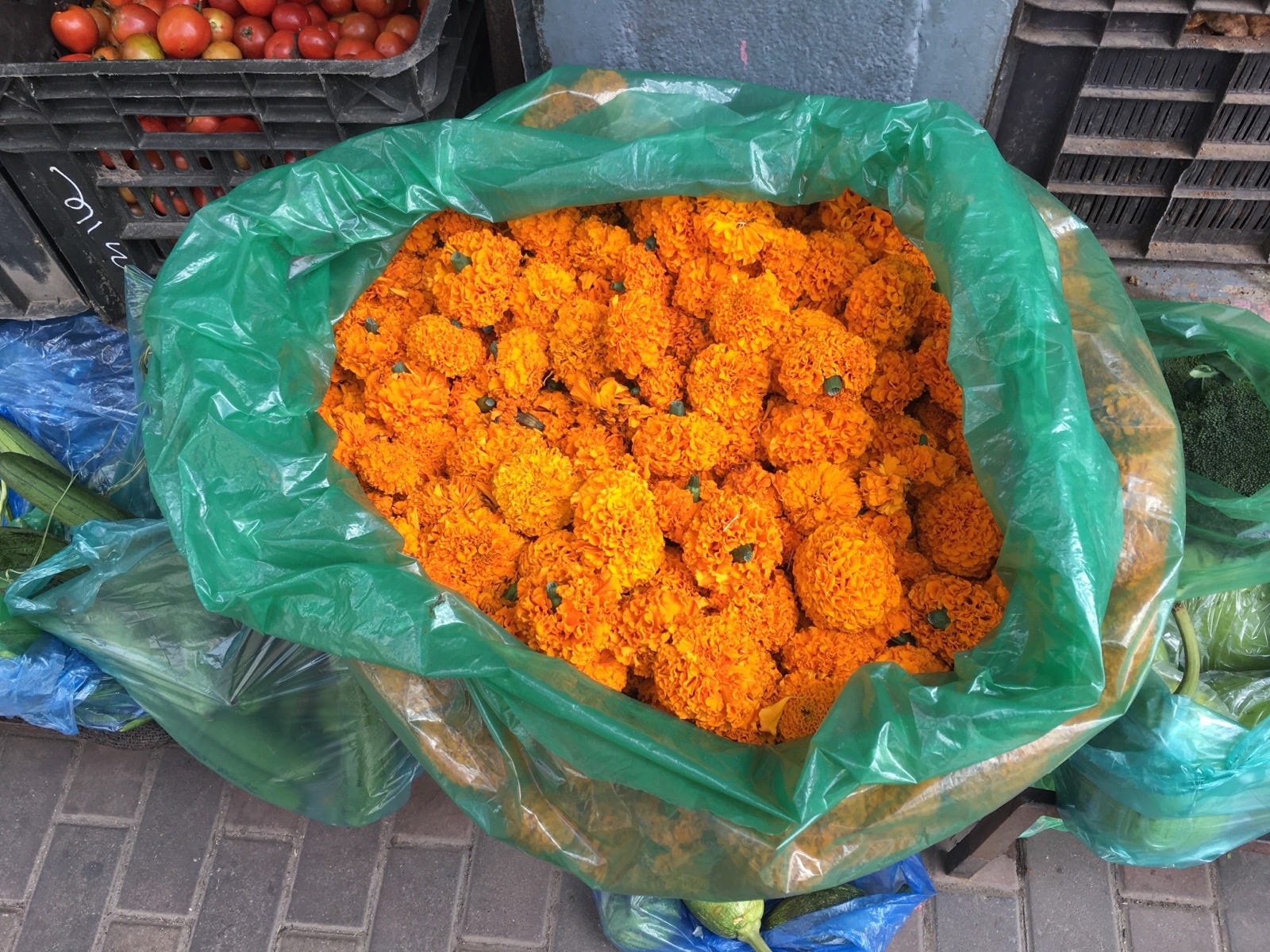
गत साता
३ लेख, स्रोतपिच्छे बढीमा दुईKathmandu Alley Cat· Oct 7Kathmandu kitesboth kindsEvangeline Neve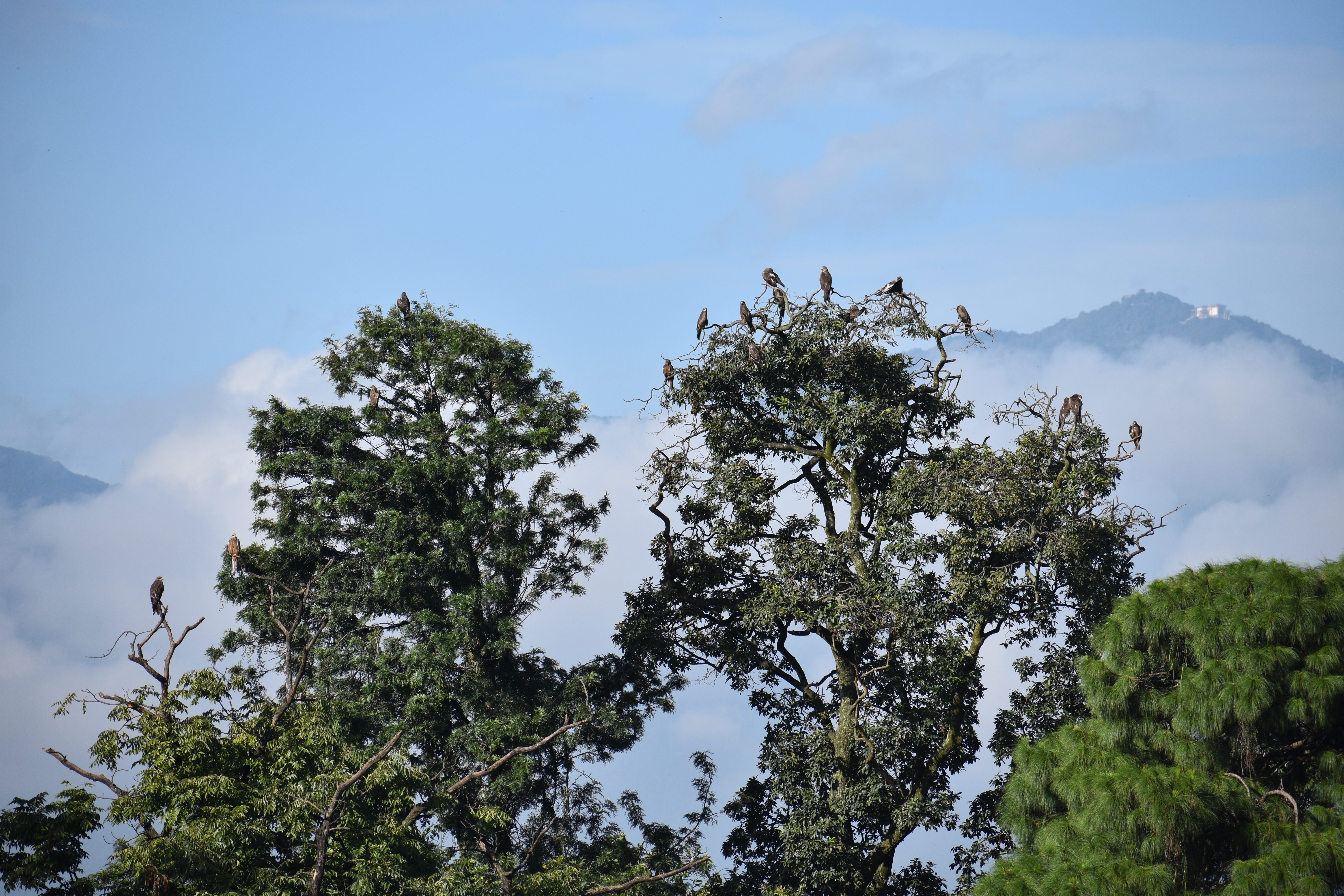 Nepal Unplugged· Oct 6Gagan’s Harder Test: Breaking the 60–40 Habit and the Politics of LegacyThe deeper test may be whether political standing can be earned rather than inherited or negotiatedDr. Alok K. Bohara
 Nepal Unplugged· Oct 3Can Nepal’s Young Turks learn to govern?Can these progressive young disruptors become nation builders?Dr. Alok K. Bohara
Nepal Unplugged· Oct 6Gagan’s Harder Test: Breaking the 60–40 Habit and the Politics of LegacyThe deeper test may be whether political standing can be earned rather than inherited or negotiatedDr. Alok K. BoharaNepal Unplugged· Oct 3Can Nepal’s Young Turks learn to govern?Can these progressive young disruptors become nation builders?Dr. Alok K. Boharaपहिले
६ लेख, स्रोतपिच्छे बढीमा दुईKathmandu Alley Cat· Sep 30Sunday walkalso mo:mo: two waysEvangeline Neve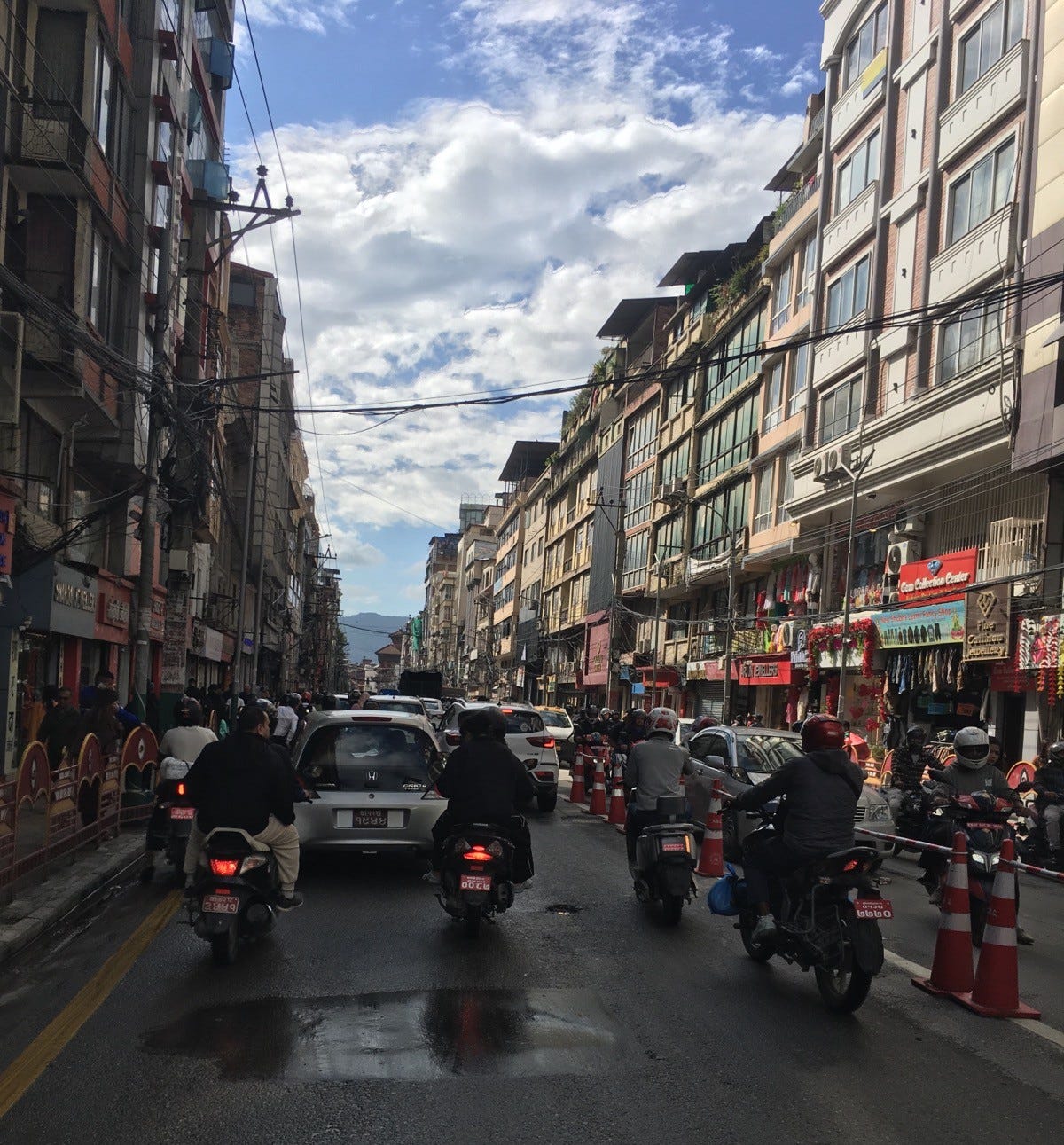 नेपाली विचार· Sep 27The UN as a Crime Scene: How Trump’s UNGA Speech Revealed the Global South’s Predicament.The UN as a Crime Scene: How Trump’s UNGA Speech Revealed the Global South’s Predicament. Senior Advocate Dr. Khimlal Devkota, Constituent Assembly Member The 81st United Nations General Assembly is unlikely to be remembered for its diplomatic efforts. It will be recalled as the point when the illusion of multilateral agreement perished—not silently through compromise, but with the triumph of a conqueror's rewards. President Donald Trump’s speech on September 22, 2026, served multiple purposes: a campaign message, a security evaluation, and a marketing strategy for artificial intelligence. However, for the Global South—which encompasses the large, dynamic majority of people from the Sahel to the Strait of Malacca—it represented something much more significant: a reflection of a harsh imbalance that no level of UN discourse can disguise. The Conflict That Belongs to Others Reflect on what Trump’s Iran conflict has genuinely brought about for nations uninvolved in its instigation. Ian Bremmer told NPR with unsettling precision: “The spikes in food costs and energy prices are significantly larger for many nations listening to Trump's speech, particularly in the Global South, and that is damaging them politically despite their lack of involvement in initiating or prolonging the war.” This is the mathematics of empire that the UN was created to stop. A conflict imagined in Washington, carried out with Israel, and now poised to spread across the Strait of Hormuz has turned into a burden on the world's most impoverished. The Global South suffers from rising bread costs and fuel shortages due to a conflict it opposed, centered around an Islamic Republic it never wished to see destroyed. Trump's speculation—will he "strike a deal with Iran or destroy the Islamic Republic"?—was expressed not as a diplomatic stance but as a personal caprice, oddly aligned with the American election timeline. The Global South observed a superpower nonchalantly discuss genocide. "To the winner go the rewards." Then arrived Venezuela. Trump didn't just declare Nicolás Maduro's arrest and the establishment of a compliant regime. He endorsed an oil agreement with the new administration and proclaimed, with unapologetic triumph, “to the victor go the spoils.” This statement should be etched into the marble of the UN's entrance as a caution instead of a slogan. As Bremmer pointed out, it would be difficult to create a statement more opposed to the UN Charter—a document, by the way, developed by Americans in San Francisco after World War II specifically to conclude the era of conquest. For the Global South, Venezuela was never centered on Maduro. It concerns the idea that sovereignty is not a reward to be captured by the powerful. When Brazil’s Lula da Silva addressed the audience following Trump and asserted that Latin America is not “the backyard of anyone,” he was representing more than just Brazil. He voiced the sentiments of every country that has observed a superpower impose its government through force while labeling it as liberation. The Design of Neglect The true geopolitics of this UNGA are found not in Trump's comments, but in the covert actions of others. POLITICO’s coverage of the summit’s periphery uncovered something more significant than walkouts and responses: the Global South is establishing alternatives. Nations throughout South America, Asia, and Africa leveraged the General Assembly’s margins not to influence Washington, but to strengthen ties with Beijing. Senator Chris Murphy noted, “Nations are strengthening their ties with China, and no significant new agreements are being made with the United States.” This isn’t based on ideology. It is foundational. The Global South is not “favoring” China over America in any idealistic manner. It is protecting itself from a superpower.When the United States dismisses global AI regulation, declines carbon taxes on shipping, and views international organizations as "globalist" infringements on American autonomy, it is not retreating from the world—it is retreating from the world’s limitations. Climate Hypocrisy as a Fundamental Danger For the island nations in the Global South, Trump's denial of climate change is more than just a difference in policy. It is a verdict of death. Trump informed the UN that “the planet was cooling, not warming, and no one was deceased.” In just a few hours, the president of Seychelles stated that rising sea levels are “attacking our very foundations,” while Sierra Leone’s leader recounted witnessing the ocean “consume their land, their fisheries, and the resting places of their ancestors.” CNN's fact-check revealed that Trump’s assertions are filled with inaccuracies—the world has recently gone through its eleven hottest years documented. However, the Global South does not require fact-checking. Water is right at its entrance. The Actual Address Trump’s speech at the UNGA will be examined for its menaces and its peculiarities. However, its actual significance is captured in one straightforward statement, expressed sincerely: “There is no worldwide government, and during my presidency, there will not be any global taxes.” For the Global South, this did not signify a commitment to freedom from bureaucracy. It was a statement asserting that the most powerful will never agree to be ruled by regulations that could limit their authority. It was an acknowledgment that the UN's original commitment—equal sovereignty, collective security, mutual prosperity—has consistently depended on the approval of the powerful. The Global South’s reaction, evident in the walkouts, the set-aside China agreements, and the subtle departure from the American sphere, is not an uprising. It is a judgment. The multilateral system was never designed for their benefit. It was constructed to oversee them. Trump did not undermine the UN. He honestly described what it has turned into: a platform where the influential enact diplomacy and the weak bear the costs of the show. https://www.linkedin.com/pulse/un-crime-scene-how-trumps-unga-speech-revealed-global-dr-khimlal-q7pbc By Khimlal DevkotaNepal Unplugged· Sep 25After the Flood: The Geography of Learning — Part 3Connecting Science from Above with Capability on the GroundDr. Alok K. Bohara
 नेपाली विचार· Sep 25A Technocrat's "Uprising": A Critical Analysis of Balen Shah's UN AddressA Technocrat's "Uprising": A Critical Analysis of Balen Shah's UN Address Senior Advocate Dr. Khimlal Devkota CA Member Balen Shah’s address at the UN, which criticized the disparities in the global system by stating "efficient logistics for war but disrupted supply chains for food," had a clearly anti-imperialist undertone. However, from a Maoist perspective, it represents merely a technocrat's ethical condemnation within the capitalist system; the vagueness of his class roots and the lack of a revolutionary trajectory reveal the deep shortcomings of Nepal's "Gen Z" political movement. Shah's ascent is a byproduct of the decline within Nepal's legacy party structure. The Communist Party of Nepal (Maoist Centre)—which previously challenged the semi-feudal system through "People’s War"—declined after entering parliament, becoming just another participant in a "political retirement home" that alternated in power and divided benefits with the Nepali Congress and the UML. For more than eighteen years and under fifteen administrations, corruption has thrived while youth unemployment has stayed persistently elevated. Shah emerged as a rapper and engineer, powerfully executing a "dimensional strike" against this stagnant system. Maoists need to recognize an undeniable reality: when the established Maoist parties abandoned the mass line, the people's frustration inevitably found a new expression—even if that expression was a technocrat labeled as "professional yet anti-establishment." The issue, however, is that Shah's criticism stays solely ethical. At the UN, he expressed being "hurt by conflicts we did not start," and the powerlessness of small countries ensnared in the politics of major powers; however, he avoided addressing a critical point: the fundamental reason for Nepal’s poverty and reliance is not due to technical shortcomings in "global logistics," but rather in the inability to fully eliminate semi-colonial and semi-feudal production relations. India’s extensive dominance over Nepal—from the unequal treaty of 1950 to the 2015 border blockade—cannot be reversed merely by "transparency" or "evaluating project efficiency." Although Shah’s "hardline nationalism" toward India is indeed praiseworthy, without land reform, the militarization of the populace, and a confrontation with comprador capital and feudal land rents, any "Nepal First" slogan will inevitably be confined to mere diplomatic rhetoric. Even more troubling is the uncertainty surrounding Shah's social status. He challenges the "debt sustainability" of significant infrastructure projects but does not address the appeal of Nepal’s inclusion in the global capitalist system. The Maoist agenda promotes the dismantling of oppressive production relations, rather than establishing a more "transparent" type of dependency within the current system. A mayor with an engineering background may clear riverbeds and dismantle unlawful constructions, yet local governance cannot tackle the underlying issues that drive 40 percent of Nepal's young population to look for jobs overseas. The heartfelt story presented at the UN General Assembly conceals the lack of a revolutionary agent: the united ranks of laborers and farmers. Certainly, it would be negligent to just label Shah as a "bourgeois politician." His mass support is authentic, and the intense fury of the protesting youth is sincere. Maoists should not simply observe and mock from the sidelines; they must ask an important question: if "Generation Z's" anger isn’t focused on the socialization of the means, if it doesn’t unite with the rural impoverished, and if it does not uphold autonomous class organization beyond the parliamentary framework, then this "upheaval" will eventually be co-opted and tamed by the existing state structure—or might even perpetuate the same exploitation under a different appearance. The grievances voiced from the UN podium deserve to be heard, but Maoists must ask a further question: who will transform these grievances into a revolution? By Khimlal DevkotaKathmandu Alley Cat· Sep 23A small ode to writing about the moment, in the momentthanks for being along for another yearEvangeline NeveNepal Unplugged· Sep 20Nepal’s New Experiment in Diplomatic Appointments: Will It Help Nurture the Next Yadu Nath KhanalOpen competition is a welcome start. The deeper challenge is building and sustaining a national reservoir of diplomatic expertise.Dr. Alok K. Bohara
नेपाली विचार· Sep 27The UN as a Crime Scene: How Trump’s UNGA Speech Revealed the Global South’s Predicament.The UN as a Crime Scene: How Trump’s UNGA Speech Revealed the Global South’s Predicament. Senior Advocate Dr. Khimlal Devkota, Constituent Assembly Member The 81st United Nations General Assembly is unlikely to be remembered for its diplomatic efforts. It will be recalled as the point when the illusion of multilateral agreement perished—not silently through compromise, but with the triumph of a conqueror's rewards. President Donald Trump’s speech on September 22, 2026, served multiple purposes: a campaign message, a security evaluation, and a marketing strategy for artificial intelligence. However, for the Global South—which encompasses the large, dynamic majority of people from the Sahel to the Strait of Malacca—it represented something much more significant: a reflection of a harsh imbalance that no level of UN discourse can disguise. The Conflict That Belongs to Others Reflect on what Trump’s Iran conflict has genuinely brought about for nations uninvolved in its instigation. Ian Bremmer told NPR with unsettling precision: “The spikes in food costs and energy prices are significantly larger for many nations listening to Trump's speech, particularly in the Global South, and that is damaging them politically despite their lack of involvement in initiating or prolonging the war.” This is the mathematics of empire that the UN was created to stop. A conflict imagined in Washington, carried out with Israel, and now poised to spread across the Strait of Hormuz has turned into a burden on the world's most impoverished. The Global South suffers from rising bread costs and fuel shortages due to a conflict it opposed, centered around an Islamic Republic it never wished to see destroyed. Trump's speculation—will he "strike a deal with Iran or destroy the Islamic Republic"?—was expressed not as a diplomatic stance but as a personal caprice, oddly aligned with the American election timeline. The Global South observed a superpower nonchalantly discuss genocide. "To the winner go the rewards." Then arrived Venezuela. Trump didn't just declare Nicolás Maduro's arrest and the establishment of a compliant regime. He endorsed an oil agreement with the new administration and proclaimed, with unapologetic triumph, “to the victor go the spoils.” This statement should be etched into the marble of the UN's entrance as a caution instead of a slogan. As Bremmer pointed out, it would be difficult to create a statement more opposed to the UN Charter—a document, by the way, developed by Americans in San Francisco after World War II specifically to conclude the era of conquest. For the Global South, Venezuela was never centered on Maduro. It concerns the idea that sovereignty is not a reward to be captured by the powerful. When Brazil’s Lula da Silva addressed the audience following Trump and asserted that Latin America is not “the backyard of anyone,” he was representing more than just Brazil. He voiced the sentiments of every country that has observed a superpower impose its government through force while labeling it as liberation. The Design of Neglect The true geopolitics of this UNGA are found not in Trump's comments, but in the covert actions of others. POLITICO’s coverage of the summit’s periphery uncovered something more significant than walkouts and responses: the Global South is establishing alternatives. Nations throughout South America, Asia, and Africa leveraged the General Assembly’s margins not to influence Washington, but to strengthen ties with Beijing. Senator Chris Murphy noted, “Nations are strengthening their ties with China, and no significant new agreements are being made with the United States.” This isn’t based on ideology. It is foundational. The Global South is not “favoring” China over America in any idealistic manner. It is protecting itself from a superpower.When the United States dismisses global AI regulation, declines carbon taxes on shipping, and views international organizations as "globalist" infringements on American autonomy, it is not retreating from the world—it is retreating from the world’s limitations. Climate Hypocrisy as a Fundamental Danger For the island nations in the Global South, Trump's denial of climate change is more than just a difference in policy. It is a verdict of death. Trump informed the UN that “the planet was cooling, not warming, and no one was deceased.” In just a few hours, the president of Seychelles stated that rising sea levels are “attacking our very foundations,” while Sierra Leone’s leader recounted witnessing the ocean “consume their land, their fisheries, and the resting places of their ancestors.” CNN's fact-check revealed that Trump’s assertions are filled with inaccuracies—the world has recently gone through its eleven hottest years documented. However, the Global South does not require fact-checking. Water is right at its entrance. The Actual Address Trump’s speech at the UNGA will be examined for its menaces and its peculiarities. However, its actual significance is captured in one straightforward statement, expressed sincerely: “There is no worldwide government, and during my presidency, there will not be any global taxes.” For the Global South, this did not signify a commitment to freedom from bureaucracy. It was a statement asserting that the most powerful will never agree to be ruled by regulations that could limit their authority. It was an acknowledgment that the UN's original commitment—equal sovereignty, collective security, mutual prosperity—has consistently depended on the approval of the powerful. The Global South’s reaction, evident in the walkouts, the set-aside China agreements, and the subtle departure from the American sphere, is not an uprising. It is a judgment. The multilateral system was never designed for their benefit. It was constructed to oversee them. Trump did not undermine the UN. He honestly described what it has turned into: a platform where the influential enact diplomacy and the weak bear the costs of the show. https://www.linkedin.com/pulse/un-crime-scene-how-trumps-unga-speech-revealed-global-dr-khimlal-q7pbc By Khimlal DevkotaNepal Unplugged· Sep 25After the Flood: The Geography of Learning — Part 3Connecting Science from Above with Capability on the GroundDr. Alok K. Boharaनेपाली विचार· Sep 25A Technocrat's "Uprising": A Critical Analysis of Balen Shah's UN AddressA Technocrat's "Uprising": A Critical Analysis of Balen Shah's UN Address Senior Advocate Dr. Khimlal Devkota CA Member Balen Shah’s address at the UN, which criticized the disparities in the global system by stating "efficient logistics for war but disrupted supply chains for food," had a clearly anti-imperialist undertone. However, from a Maoist perspective, it represents merely a technocrat's ethical condemnation within the capitalist system; the vagueness of his class roots and the lack of a revolutionary trajectory reveal the deep shortcomings of Nepal's "Gen Z" political movement. Shah's ascent is a byproduct of the decline within Nepal's legacy party structure. The Communist Party of Nepal (Maoist Centre)—which previously challenged the semi-feudal system through "People’s War"—declined after entering parliament, becoming just another participant in a "political retirement home" that alternated in power and divided benefits with the Nepali Congress and the UML. For more than eighteen years and under fifteen administrations, corruption has thrived while youth unemployment has stayed persistently elevated. Shah emerged as a rapper and engineer, powerfully executing a "dimensional strike" against this stagnant system. Maoists need to recognize an undeniable reality: when the established Maoist parties abandoned the mass line, the people's frustration inevitably found a new expression—even if that expression was a technocrat labeled as "professional yet anti-establishment." The issue, however, is that Shah's criticism stays solely ethical. At the UN, he expressed being "hurt by conflicts we did not start," and the powerlessness of small countries ensnared in the politics of major powers; however, he avoided addressing a critical point: the fundamental reason for Nepal’s poverty and reliance is not due to technical shortcomings in "global logistics," but rather in the inability to fully eliminate semi-colonial and semi-feudal production relations. India’s extensive dominance over Nepal—from the unequal treaty of 1950 to the 2015 border blockade—cannot be reversed merely by "transparency" or "evaluating project efficiency." Although Shah’s "hardline nationalism" toward India is indeed praiseworthy, without land reform, the militarization of the populace, and a confrontation with comprador capital and feudal land rents, any "Nepal First" slogan will inevitably be confined to mere diplomatic rhetoric. Even more troubling is the uncertainty surrounding Shah's social status. He challenges the "debt sustainability" of significant infrastructure projects but does not address the appeal of Nepal’s inclusion in the global capitalist system. The Maoist agenda promotes the dismantling of oppressive production relations, rather than establishing a more "transparent" type of dependency within the current system. A mayor with an engineering background may clear riverbeds and dismantle unlawful constructions, yet local governance cannot tackle the underlying issues that drive 40 percent of Nepal's young population to look for jobs overseas. The heartfelt story presented at the UN General Assembly conceals the lack of a revolutionary agent: the united ranks of laborers and farmers. Certainly, it would be negligent to just label Shah as a "bourgeois politician." His mass support is authentic, and the intense fury of the protesting youth is sincere. Maoists should not simply observe and mock from the sidelines; they must ask an important question: if "Generation Z's" anger isn’t focused on the socialization of the means, if it doesn’t unite with the rural impoverished, and if it does not uphold autonomous class organization beyond the parliamentary framework, then this "upheaval" will eventually be co-opted and tamed by the existing state structure—or might even perpetuate the same exploitation under a different appearance. The grievances voiced from the UN podium deserve to be heard, but Maoists must ask a further question: who will transform these grievances into a revolution? By Khimlal DevkotaKathmandu Alley Cat· Sep 23A small ode to writing about the moment, in the momentthanks for being along for another yearEvangeline NeveNepal Unplugged· Sep 20Nepal’s New Experiment in Diplomatic Appointments: Will It Help Nurture the Next Yadu Nath KhanalOpen competition is a welcome start. The deeper challenge is building and sustaining a national reservoir of diplomatic expertise.Dr. Alok K. Bohara
.jpg)